Pages

Oct 14, 2011

Death Soul of Capitalism


ARROYO GRANDE, Calif. (MarketWatch) -- Jack Bogle published "The Battle for the Soul of Capitalism" four years ago. The battle's over. The sequel should be titled: "Capitalism Died a Lost Soul." Worse, we've lost "America's Soul." And, worldwide, the consequences will be catastrophic.
That's why a man like Hong Kong contrarian economist Marc Faber warns in his Doom, Boom & Gloom Report: "The future will be a total disaster, with a collapse of our capitalistic system as we know it today."
No, not just another meltdown, another bear-market recession like the one recently triggered by Wall Street's too-greedy-to-fail banks. Faber is warning that the entire system of capitalism will collapse. Get it? The engine driving the great "American Economic Empire" for 233 years will collapse, a total disaster, a destiny we created.
OK, deny it. But I'll bet you have a nagging feeling that maybe he's right, that the end may be near. I have for a long time: I wrote a column back in 1997: "Battling for the Soul of Wall Street." My interest in "The Soul" -- what Jung called the "collective unconscious" -- dates back to my Ph.D. dissertation, "Modern Man in Search of His Soul," a title borrowed from Jung's 1933 book, "Modern Man in Search of a Soul." This battle has been on my mind since my days at Morgan Stanley 30 years ago, witnessing the decline.
Has capitalism lost its soul? Guys like Bogle and Faber sense it. Read more about the soul in physicist Gary Zukav's "The Seat of the Soul," Thomas Moore's "Care of the Soul" and sacred texts.
But for Wall Street and American capitalism, use your gut. You know something's very wrong: A year ago, too-greedy-to-fail banks were insolvent, in a near-death experience. Now, magically, they're back to business as usual, arrogant, pocketing outrageous bonuses while Main Street sacrifices, and unemployment and foreclosures continue rising as tight credit, inflation and skyrocketing federal debt are killing taxpayers.
Yes, Wall Street has lost its moral compass. It created the mess, but now, like vultures, Wall Streeters are capitalizing on the carcass. They have lost all sense of fiduciary duty, ethical responsibility and public obligation.
Here are the Top 20 reasons American capitalism has lost its soul:

1. Collapse is now inevitable

Capitalism has been the engine driving America and the global economies for over two centuries. Faber predicts its collapse will trigger global "wars, massive government-debt defaults, and the impoverishment of large segments of Western society." Faber knows that capitalism is not working, capitalism has peaked, and the collapse of capitalism is "inevitable."
When? He hesitates: "But what I don't know is whether this final collapse, which is inevitable, will occur tomorrow, or in five or 10 years, and whether it will occur with the Dow at 100,000 and gold at $50,000 per ounce or even confiscated, or with the Dow at 3,000 and gold at $1,000." But the end is inevitable, a historical imperative.

2. Nobody's planning for a 'Black Swan'

While the timing may be uncertain, the trigger is certain. Societies collapse because they fail to plan ahead, cannot act fast enough when a catastrophic crisis hits. Think "Black Swan" and read evolutionary biologist Jared Diamond's "Collapse: How Societies Choose to Fail or Succeed."
A crisis hits. We act surprised. Shouldn't. But it's too late: "Civilizations share a sharp curve of decline. Indeed, a society's demise may begin only a decade or two after it reaches its peak population, wealth and power."
Warnings are everywhere. Why not prepare? Why sabotage our power, our future? Why set up an entire nation to fail? Diamond says: Unfortunately "one of the choices has depended on the courage to practice long-term thinking, and to make bold, courageous, anticipatory decisions at a time when problems have become perceptible but before they reach crisis proportions."
Sound familiar? "This type of decision-making is the opposite of the short-term reactive decision-making that too often characterizes our elected politicians," thus setting up the "inevitable" collapse. Remember, Greenspan, Bernanke, Bush, Paulson all missed the 2007-8 meltdown: It will happen again, in a bigger crisis.

3. Wall Street sacked Washington

Bogle warned of a growing three-part threat -- a "happy conspiracy" -- in "The Battle for the Soul of Capitalism:" "The business and ethical standards of corporate America, of investment America, and of mutual fund America have been gravely compromised."
But since his book, "Wall Street America" went over to the dark side, got mega-greedy and took control of "Washington America." Their spoils of war included bailouts, bankruptcies, stimulus, nationalizations and $23.7 trillion new debt off-loaded to the Treasury, Fed and American people.
Who's in power? Irrelevant. The "happy conspiracy" controls both parties, writes the laws to suit its needs, with absolute control of America's fiscal and monetary policies. Sorry Jack, but the "Battle for the Soul of Capitalism" really was lost.

4. When greed was legalized

Go see Michael Moore's documentary, "Capitalism: A Love Story." "Disaster Capitalism" author Naomi Klein recently interviewed Moore in The Nation magazine: "Capitalism is the legalization of this greed. Greed has been with human beings forever. We have a number of things in our species that you would call the dark side, and greed is one of them. If you don't put certain structures in place or restrictions on those parts of our being that come from that dark place, then it gets out of control."

Greed's OK, within limits, like the 10 Commandments. Yes, the soul can thrive around greed, if there are structures and restrictions to keep it from going out of control. But Moore warns: "Capitalism does the opposite of that. It not only doesn't really put any structure or restrictions on it. It encourages it, it rewards" greed, creating bigger, more frequent bubble/bust cycles.
It happens because capitalism is now in "the hands of people whose only concern is their fiduciary responsibility to their shareholders or to their own pockets." Yes, greed was legalized in America, with Wall Street running Washington.

5. Triggering the end of our 'life cycle'

Like Diamond, Faber also sees the historical imperative: "Every successful society" grows "out of some kind of challenge." Today, the "life cycle" of capitalism is on the decline.
He asks himself: "How are you so sure about this final collapse?" The answer: "Of all the questions I have about the future, this is the easiest one to answer. Once a society becomes successful it becomes arrogant, righteous, overconfident, corrupt, and decadent ... overspends ... costly wars ... wealth inequity and social tensions increase; and society enters a secular decline." Success makes us our own worst enemy.
Quoting 18th century Scottish historian Alexander Fraser Tytler: "The average life span of the world's greatest civilizations has been 200 years" progressing from "bondage to spiritual faith ... to great courage ... to liberty ... to abundance ... to selfishness ... to complacency ... to apathy ... to dependence and ... back into bondage!"
Where is America in the cycle? "It is most unlikely that Western societies, and especially the U.S., will be an exception to this typical 'society cycle.' ... The U.S. is somewhere between the phase where it moves 'from complacency to apathy' and 'from apathy to dependence.'"
In short, America is a grumpy old man with hardening of the arteries. Our capitalism is near the tipping point, unprepared for a catastrophe, set up for collapse and rapid decline.

15 more clues capitalism lost its soul ... is a disaster waiting to happen

Much more evidence litters the battlefield:
  1. Wall Street wealth now calls the shots in Congress, the White House
  2. America's top 1% own more than 90% of America's wealth
  3. The average worker's income has declined in three decades while CEO compensation exploded over ten times
  4. The Fed is now the 'fourth branch of government' operating autonomously, secretly printing money at will
  5. Since Goldman and Morgan became bank holding companies, all banks are back gambling with taxpayer bailout money plus retail customer deposits
  6. Bill Gross warns of a "new normal" with slow growth, low earnings and stock prices
  7. While the White House's chief economist retorts with hype of a recovery unimpeded by the "new normal"
  8. Wall Street's high-frequency junkies make billions trading zombie stocks like AIG, FNMA, FMAC that have no fundamental value beyond a Treasury guarantee
  9. 401(k)s have lost 26.7% of their value in the past decade
  10. Oil and energy costs will skyrocket
  11. Foreign nations and sovereign funds have started dumping dollars, signaling the end of the dollar as the world's reserve currency
  12. In two years federal debt exploded from $11.2 to $23.7 trillion
  13. New financial reforms will do little to prevent the next meltdown
  14. The "forever war" between Western and Islamic fundamentalists will widen
  15. As will environmental threats and unfunded entitlements
"America Capitalism" is a "Lost Soul" ... we've lost our moral compass ... the coming collapse is the end of an "inevitable" historical cycle stalking all great empires to their graves. Downsize your lifestyle expectations, trust no one, not even media.
Faber is uncertain about timing, we are not. There is a high probability of a crisis and collapse by 2012. The "Great Depression 2" is dead ahead. Unfortunately, there's absolutely nothing you can do to hide from this unfolding reality or prevent the rush of the historical imperative.

Oct 7, 2011

Mumtaz Qadri Awarded Death By ATC Pakistan

RAWALPINDI -An anti-terrorism court (ATC) Saturday awarded death sentence to Malik Mumtaz Hussain Qadri in the murder case of former Punjab Governor Salmaan Taseer, sparking protests in almost all major cities of the county.

ATC No 2 Judge Syed Pervez Ali Shah handed down death penalty to Qadri on two counts for killing Taseer on January 4 this year and creating a scene of terrorism under section 302 of Pakistan Penal Court (PPC) and Anti-Terrorism Act (ATA) Section 7 during in-camera trial held at Adyala Jail amid tight security. The court also imposed Rs 200,000 fine on Qadri. Police were deployed at the jail gate to prevent any break-in. After Qadri was sentenced, the judge left through the back door. Mumtaz Qadri, who was on guard duty in Taseer’s Elite Force guards at the time of killing, shot the governor down outside a an upmarket restaurant close to his residence in the leafy capital Islamabad for his views on the blasphemy laws. Mumtaz was arrested on the spot with the weapon. He confessed killing Taseer under oath.
During the in-camera hearing of the Taseer murder case, the ATC said that the murder, being a heinous crime, had no justification to it. The court said that no one could be given the license to kill someone on any condition. Therefore, the killer cannot be pardoned as he has committed a heinous crime by murdering the governor.
Qadri tried to justify the murder by stating that he had killed him for supporting Aasia Bibi, a Christian woman having five children and sentenced to death in November 2010, who Taseer had projected as having been wrongly convicted of committing blasphemy.
According to Qadri’s statement, he had approached Taseer on the evening of January 4 and tried to talk to him about his very public support for Aasia Bibi and his advocacy of reform – not repeal – of the controversial blasphemy laws.
During the trial held on September 24 last, ATC Judge Syed Pervez Ali Shah adjourned the hearing till October 1, 2011 after completion of arguments of defence council. The judge ordered the prosecutor Saiful Malook advocate, who could not appear before the court, to submit his arguments in written with the court in the case on the next date of hearing. A total of 43 witnesses were presented before the court by prosecution, however, the court recorded statement of only 14 witnesses. Legal experts say that the accused has seven days to appeal against the verdict. “The court has awarded my client with death. The court announced the death sentence for him,” Shujaur Rehman, one of Qadri’s lawyers, told the media. He said he will lodge an appeal in a high court against the verdict,” the lawyer said.
Talking to The Nation, Raja Shujahur Rehman termed the verdict as ‘unprecedented’, saying, “during today’s proceeding the court had to listen to the arguments of the prosecution and close the case instead of delivering its verdict.”
He said that in routine the defence counsels are told about the ATC judge’s departure schedule for Adyala Jail to take up the case and after confirmation the defence counsels reached jail before the time. Despite repeated contacts from 08:00 to 10:00am made by Qadri’s lawyers to know the departure schedule of the judge, the staff informed them the judge was in his chamber and did not leave for Adyala Jail, he added.
“The defence counsel was informed by the court only after awarding death sentence to Qadri,” Shujah said, adding that defence counsel was going to file a plea with the court under Section 23 of ATA during trial.
Briefing about details, Shujah informed that it was mentioned in the application that terrorism charges were not proved against Qadri in the case that was why the court could not held the trial. Therefore, it was prayed to shift the case to a Sessions Court, he added. “I wonder why the judge made this unprecedented haste in delivering his verdict in the absence of defence lawyers. What kind of fear he (judge) was feeling that forced him to sentence Qadri to death secretly,” Raja Shujah-ur Rehman stated.
He told this scribe that he and his colleague Tariq Dhamial also met with Qadri at Adyala Jail. He said that Qadri welcomed them with a smiling face in the cell and first recited Sura-e-Kauser and then presented Na’at Sharif.
“I have a complaint with you people why you came to meet me without sweets? Now I request you to go back to your homes and distribute sweets among the people as today Allah Almighty has accepted my sacrifice,” Shujah quoted Qadri as saying during their meeting at Adyala Jail.
The defence counsel informed that father and brothers of Qadri were also present on the occasion in the cell. “The father of Qadri said “Allah-o-Akbar” aloud thrice before hugging his son. On this, Qadri swiftly hugged his father and asked him not to worry as the sentence is not a death sentence rather it is martyrdom,” Shujah quoted Qadri as saying.
Talking to The Nation, Tariq Dhamial, defence counsel for Qadri, told that they would file and appeal against the verdict in the Islamabad High Court within 10 days.
Whether Qadri will hang will remain open even after the appeals process is exhausted. According to Amnesty International, Pakistan has had an informal moratorium on executions in place since late 2008, before which it had hanged at least 36 people that year. No one has ever been sent to the gallows under Pakistan’s blasphemy law. Those sentenced to death have had their sentences overturned or commuted.
Hundreds of charged workers of many religious groups came on roads of Rawalpindi to protest against the verdict while police and other law enforcement agencies did not try to control the enraged protesters. The protesters expressed their outrage by burning tyres on almost all main roads, blocking traffic, hitting windowpanes of public and private transport with sticks and iron rods and ripping portraits of government figures.
In Rawalpindi’s Liaquat Bagh area, where former Prime Minister Benazir Bhutto was assassinated in December 2007, about 1,000 angry Qadri supporters blocked a main road with burning tyres. Shouting slogans against the government and the judge who sentenced Qadri, they forced shops to shut down, while stick-wielding protesters attacked passing vehicles. They also burnt the monument of PPP slain Chairperson Benazir Bhutto at Liaquat Bagh.
They demanded the president grant clemency to him. “By punishing one Mumtaz Qadri, you will produce a thousand Mumtaz Qadris!” a man shouted through a megaphone outside the jail.
Sunni Tehrik and other religious parties rejected the verdict calling it worse judgment than the English court which awarded death sentence to Alamdin Ghazi decades ago. “This decision was made to please the Jewish lobby,” Sahibzada Ataur Rehman, a leader of the Sunni Tehreek, was quoted as saying.
Sunni Tehrik, Tehrik-i-Islam Pakistan, Jamia-e-Rizwiya Ziaul Uloom, Shahab-i-Islami Pakistan, Anjuman Tulba-i-Islam and other religious parties have announced to stage protest against the verdict that they demanded to be revised. Sunni Ittehad Council (SIC), while rejecting the ATC verdict, announced to launch a countrywide movement and observe a wheel-jam strike in the country on October 7.


Reference From www.nation.com.pk

Sep 26, 2011

Is Pakistan Helping Haqqanis Attack US in Afghanistan ?


Sirajuddin Haqqani does not carry a gun or wear a turban as he moves stealthily through the Waziristan wilderness along Pakistan's border with Afghanistan, hoping to avoid detection and getting hit by a US missile from a drone aircraft.
Yet, from his safe houses and mountain redoubts, the guerrilla commander has directed some of the most brazen attacks against US forces in Afghanistan, and is now seen as one of the most dangerous warlords in the Taliban insurgency.
Washington, with ever more strident accusations, thinks he is getting help from Pakistan's shadowy but powerful ISI intelligence agency.
The Haqqani network is a "veritable arm" of the ISI, and the agency was in contact with the group during last week's startling attack on the American embassy in Kabul, Admiral Mike Mullen, chairman of the US Joint Chiefs of Staff, told a US Senate committee on Thursday.
Pakistan's interior minister Rehman Malik rejected the accusations and warned against a unilateral US ground attack on the Haqqanis, believed to be based in the mountains of North Waziristan.
"The Pakistan nation will not allow the boots on our ground, never. Our government is already cooperating with the US ... but they also must respect our sovereignty," Malik said in an interview with Reuters this week.
Sirajuddin, the head of a group his father founded in the 1980s, says he'd look forward to a US ground attack.
"The United States will suffer more losses (in North Waziristan) than they suffered in Afghanistan," he told Reuters by satellite phone from an undisclosed location.
Still, he doesn't take chances, especially with drones overhead a constant worry -- 57 drone strikes have peppered the region so far this year, according the New American Foundation, a think-tank that keeps a database of such attacks.
Some 55 members of his family, including his brother, have been killed in such attacks. According to the New American database, at least a quarter of the drone attacks since 2008 have targeted the Haqqanis.
"I always avoid travelling in a motorcade of armed fighters, as it puts your life in danger," he said, adding that is also why he doesn't wear a turban, standard head-dress for all male Afghans, or carry a gun.
Yet he is far from being a desperate fugitive on the run. He acknowledges that Haqqani fighters now number around 15,000, making it probably the largest force among the Taliban warlords. He also moves easily across the border to areas of eastern Afghanistan where the Haqqanis are entrenched.
He even mediates disputes among the Taliban and takes part in their meetings in Afghanistan. "His word is enough," said Mahmood Shah, a former Pakistan intelligence official who monitored militants for years.
The forbidding terrain of Waziristan, which forms an ill-defined border with Afghanistan, is also his ally.
"There are certain houses and villages where the bathroom is in Afghanistan and the bedroom is in Pakistan and this creates some issues," Malik, the interior minister, said.
"That no-man's land there is not (in the) control of Pakistani forces or Afghan authorities or the US forces."
After 911
When the US invaded Afghanistan after the September 11 attacks, Taliban and al-Qaeda fighters fled through the arid hills into North and South Waziristan. The ISI, which backed the Taliban when the group came to power in the mid-1990s, seemed to turn a blind eye -- or even helped -- in their escape to Waziristan's badlands.
Sirajuddin said they were a shattered and dispirited group at first, in shock and awe of American power.
"Those were the harsh days of my life as all senior Mujahideen leaders were silent and were underground after the invasion of Afghanistan," said Sirajuddin, who is believed to be in his mid-30s.
"None of them were even willing to be called Taliban as the United States, through its media campaign, had created the wrong impression of its power and intelligence."
As was the case with Osama bin Laden, the group's patriarch and founder Jalaluddin Haqqani was a legendary mujahideen commander who worked with the Americans in the 1980s to oust the Soviet Union from Afghanistan.
Former US Congressman Charlie Wilson, whose relentless fund-raising for the Afghan resistance was depicted by Tom Hanks in the movie Charley's War, once called Jalaluddin "goodness personified." He even visited the White House when Ronald Reagan was president.
Pakistan's ISI was an integral part of the nexus, funnelling secret US funds -- Congress had outlawed US aid to Pakistan at the time -- to the mujahidden for weapons such as the anti-aircraft Stinger missile.
The relationship continued long after the Soviets left Afghanistan in the 1990s and was even exposed in some embarrassing links. The Cruise missiles the Clinton Administration fired at Laden's camp in Eastern Afghanistan in 1998, after attacks on US embassies in Africa, killed several militants -- and the team of ISI agents training them.
That legacy is at the heart of Washington's distrust of the ISI, and particularly its ties to the Haqqanis.
"We sometimes say: You are controlling -- you, Pasha -- you're controlling Haqqani," one US official said, referring to ISI head Lt. Gen. Ahmed Shuja Pasha. "Well, Pasha will come back and say ... 'no, we are in contact with them'. Well what does that mean?" the official continued, speaking on condition of anonymity.
Pakistan has repeatedly denied backing the Haqqani group.
Peace initiative

When a suicide bomber on Tuesday assassinated former Afghan president Burhanuddin Rabbani, who was leading talks with the Taliban aimed at a political settlement of the war, the finger of suspicion was initially pointed at the Haqqanis.
A Haqqani commander in a call to Reuters denied that but no one else has claimed responsibility.
Sirajuddin told Reuters the group was not opposed to peace talks, but wants them to be broader based than what has been proposed to him.
"They offered us very important positions, but we rejected and told them they would not succeed in their nefarious designs. They wanted to divide us," he told Reuters in another interview last Saturday.
"We would support whatever solution our shura members suggest for the future of Afghanistan," he said referring to the Afghan Taliban leadership.
US officials say the Haqqani network has been responsible for some of the most spectacular attacks against American targets in Afghanistan over the past year or so, including the US embassy attack that killed five police and 11 civilians in addition to three suicide bombers.
Sirajuddin half-heartedly denied responsibility for that attack. "For some reasons, I would not like to claim that fighters of our group carried out the recent attack on the US embassy and NATO headquarters. Our central leadership, particularly senior members of the shura, suggested I should keep quiet in the future if the US and its allies suffer in the future."
The Haqqanis have also been blamed for a raid on Kabul's top hotel, an assassination attempt on President Hamid Karzai and a suicide bombing of the Indian embassy. They are believed to have helped an al Qaeda suicide bomber who killed seven CIA agents at a US base in eastern Afghanistan last year.
The Haqqani's power and influence in Afghanistan is now such that they are indispensable to any settlement of the decade-long Afghan conflict, America's longest war, experts say.
"If there is to be a meaningful cessation of hostilities, the Haqqanis will have to be part of the peace process," said Vahid Brown, an expert on Islamic militancy and author of a new book, Fountainhead of Jihad: the Haqqani Nexus.
For now, Sirajuddin is one of the world's most wanted men with a $5 million bounty on his head. He said he discovered that while listening to the Voice of America.
"I don't know why, but I could not sleep that night," he said in Thursday's interview. "In the morning, I tuned into a Pashto-language broadcast of the Voice of American and came to know about this.
"I have chosen the path of jihad and I know very well about the hardships and fruits of this path."


Aug 29, 2011

Bol Film Release In India On 31st August

Shoaib Mansoor’s BOL, after its successful and record breaking release in Pakistani Cinemas, is all set to release in India and World Wide on 31st August 2011, most probably on the occasion of EID.

“The Eros group has bought Bol’s rights for Rs 5 crore. It plans to release the film shortly in India. We believe the film has the ingredients, like a strong script and good performances, to do well in India.”

Song Hona Tha Pyar (Singer Atif Aslam And Hadiqqa Qiyani)

The film, which is the first by the talented director after his critically acclaimed and award-winning Khuda Kay Liye, released in Pakistan on June 24. According to indiaglitz.com, the film has been declared a super hit as it has received a tremendous opening and grossed about Rs4.9 million on the first day, which is more than Ready and My Name is Khan grossed on their first day in Pakistan.
Khuda Kay Liye — a film is about the life of Muslims after 9/11 — was the first Pakistani film to be officially released in India after many years, and now Mansoor is confident that Bol will also hook the Indian audience.
Bol features the talents of Humaima Malick, singing sensation Atif Aslam, VJ Mahira Khan and model-turned actor Iman Ali, along with many other popular Pakistani actors. The film tells the tale of a girl who and challenges the age-old societal norms of treating women as the lesser sex. Based in Lahore, the film aims to highlight the plight of women, who are often treated as burdens by a large percentage of society. The movie also treads no-go areas like homosexuality and the life of eunuchs, in addition to talking about Shia-Sunni dynamics.
Bollywood has rejuvenated dying Pakistani theatres and now Pakistan’s film industry is looking to Indian audiences for survival.Bol is just the third film produced this year in Pakistan. “The film industry has to cater to larger markets, which are very different from those that existed in past. 

Aug 25, 2011

WiFi Technology


What is Wi Fi?

A way to get Internet access, the term Wi Fi is a play upon the decades-old term HiFi that describes the type of output generated by quality musical hardware, Wi Fi stands for Wireless Fidelity and is used to define any of the wireless technology in the IEEE 802.11 specification - including (but not necessarily limited to) the wireless protocols 802.11a, 802.11b, and 802.11g. The Wi-Fi Alliance is the body responsible for promoting the term and its association with various wireless technology standards.

What is a Wi Fi Hotspot?

A Wi Fi hotspot is defined as any location in which 802.11 (wireless) technology both exists and is available for use to consumers. In some cases the wireless access is free, and in others, wireless carriers charge for Wi Fi usage. Generally, the most common usage of Wi Fi technology is for laptop users to gain Internet access in locations such as airports, coffee shops, and so on, where Wi Fi technology can be used to help consumers in their pursuit of work-based or recreational Internet usage.

How Can I Use Wi Fi?

You must be using a computer or PDA that has Wi Fi connectivity already working. Most portable computers can add Wi Fi using an adapter that plugs into a PC card slot or USB port.

Will I need to have an account with a Wi Fi service provider?

Generally, no. You should be able to sign up with the provider at the location. Many providers will display instructions when browser software opens on a WiFi-enabled computer. If you don't have an account, simply start your computer and make sure your Wi Fi card is plugged on. Then, open a browser.

Is Wi Fi the same as Bluetooth?

No. While both are wireless technology terms, Bluetooth technology lives under the IEEE protocol 802.15.1, while Wi Fi falls under the 802.11 specification. What this means for consumers is that appliances using Wi Fi technology and those using Bluetooth technology are not interoperable. Bluetooth and Wi Fi are different in several ways, and are not necessarily in competition. Wi Fi technology boasts faster data transfer speeds and range, making it a good replacement for Ethernet (802.3) systems, while Bluetooth requires less power and is therefore more prominent in small appliances, such as PDAs.

Aug 20, 2011

7 Wonders In Pakistan

I was wondering if you were to chose 7 wonders in Pakistan or should i say 7 places to visit in Pakistan what do you recommend those places to be?
I mean sometimes people create different categories like 7 Wonders of the ancient world, medieval world, modern world, historical buildings, natural wonders etc but here we have to be Pakistan specific only and you can choose from any category you like and just come up with the 7 best options in your mind

I guess my question is simple now

so i rate these 7 places

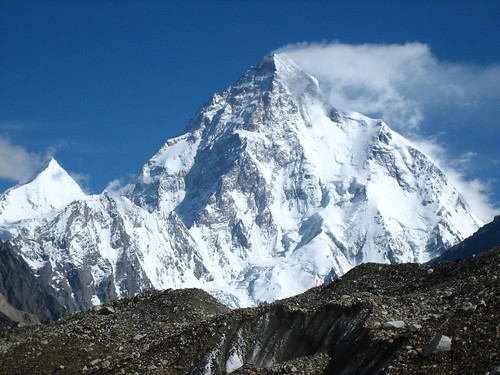
1) K2
2) Karakoram Highway
3) Khewra (Salt mines)
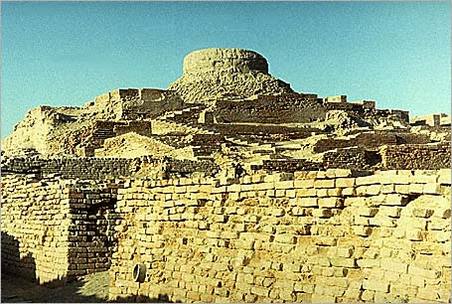
4) World Heritage Sites like Qila (fort) Rohtas, Harrapa & Mohenjo Daro
5) Khyber Pass
6) Faisal Masjid
7) Couple of lakes in Northern Areas and NWFP e.g. Jheel Saiful Malook, *** lusar Lake, Ansoo Lake etc

I tried to restrict myself into 7 but i guess these lakes are really amazing and should deserve at least one place in 7 wonders of Pakistan

Well.......What do you say?


Jul 20, 2011

Aisam-ul-Haq Got Engaged With Faha

A renowned Tennis Star of Pakistan  Aisam-ul-Haq got engaged.........

Aisam-ul-Haq Qureshi got engaged to Faha Akmal Makhdum on Saturday in Lahore.
The ceremony was attended by close friends and family.
The couple will get married in December this year.


Watch These Two Lovely Couple Videos.....
May Allah Bless Them..


FAHA want to says some thing......

Jul 5, 2011

Pakistani Movie “BOL” Break The Record Of Bollywood Movies


Shoaib Mansoor ’s 2nd full length feature film “BOL ” has broken all the previous records of Business at the box Office, Pakistan. The Pakistani Film made 22 Million rupees in just first 6 days of its release.
BOL – starring Humaima Malik , Manzar Sehbai, Atif Aslam , Mahira Khan  and Iman Ali – was released all over Pakistan on 24th June 2011. And supported by the movie promotions by the biggest media group of Pakistan and the charisma of Super Star Atif Aslam, BOL managed to gather general masses of Pakistan who had forgotten to watch movies in Cinemas.
According to the latest news reports, the movie BOL did a business of  Rs. 2,20,38,000 in first 6 days of its release. Before this record, only Shah Rukh Khan’s “My Name is Khan” had set a record at Box Office, by earning almost Rs. 2,16,58,000 (PKR 21.658 M) in a week.
It is also being estimated that at the end of the first week, BOL will make the record business of 25 Million, from just Pakistani Cinemas. It is also worth mentioning that the movie is yet to be released in India and worldwide by Eros Entertainment, which can definitely make it even more bigger and profitable for the producers.
Talking about the reviews, we have been getting mixed opinions about the movie, as some critics are appreciating the effort, while others do not find the movie ‘easy to digest’.
Whatever the case may be, it is definitely a drop of water on the dry land. The need of the time is, we focus on producing more qualitative movies and also keep in mind ‘the entertainment factor’ in our movies. The nation is seriously tired of sensationalism, negative news and violent behaviors. There is a dire need of producing more entertainment movies to keep our humor, art and cinemas alive.

Jul 2, 2011

Is It Not Enough Its Time To Restructure Pakistan Army To Keep Peace

Is it not enough its time to restructure Pakistan Army to keep peace. Allegations of Pakistan Army controlling Taliban, not taking proper and aggressive action against taliban, not following any road map to solve the problem of terrorism, taking over 50 % of budget of nation and still unable to protect itself what to talk about others speaks some thing. Does it require some change. ISI should stop working under Army chief and work under interior ministry.

Recently, there was a public demonstration in support of the Pakistan army outside the Presidential Palace. There were more banners in support of the Inter-Services Intelligence (ISI) and the army than there were demonstrators.
Ironically, all the banners were exact lookalikes. There was a desperate need for show of some public support for the military after US Navy Seals violated Pakistan’s sovereignty undetected, to hunt down Osama bin Laden. This demonstration didn’t change much.
Pakistan received a small, handicapped army after the partition of India in 1947. The civilian population, keeping the best interest of the country in mind, massively sacrificed and nourished the army to the best of its ability. With endless resources, at the cost of good civilian living standards, the army grew comfortably over the decades. Up to 70 per cent of the budget was initially allotted to the armed forces because of the defense needs of the newly born state of Pakistan. Later, the defense budget continued to rise with great advancements in nuclear and missile technologies. The idea was to establish a solid defense for the country and then move to other economic and social developments once the so-called nuclear deterrence was in place. Turns out, there is no such thing as nuclear deterrence. Instead, the result was an arrogant, business-oriented organisation that misused the trust of the civilians and stabbed the very nation which fed it selflessly.
The sacred institutions of the Pakistan military are going through a rough patch. Often labeled as the most organised institution in the country, the Pakistan army has always treated civilian politicians like pets and puppets. They often create and manipulate the political leadership, which is not able to resist the offense because of their shady, corrupt backgrounds. Of course, the army only creates politicians out of the lazy, immoral ones who can easily be blackmailed. The worst of the worst miraculously bag innumerable votes and represent the so-called democracy that exists. The civilian leadership has its graph at its lowest, with nothing to lose. But the proud armed forces are finding it increasingly hard to stand tall and justify the huge investments they have been snatching from the budget.
The recent operation by the US Navy Seals to eliminate Osama bin Laden was a PR wreck for the armed forces. The situation was such that the army was forced to plead incompetence in front of a parliament of what they usually refer to as ‘bloody civilians.’ That was a hard pill to swallow, but it was either that or the acceptance that Osama bin Laden was a guest of the military. The latter would have angered the masters of the masters. Hence, after accepting the fault, the ISI chief offered his resignation to Prime Minister Yousuf Raza Gilani. The prime minister said nothing. Furthermore, the prime minister even lobbied against an independent inquiry commission to investigate what had happened. In other words, the army would decide if the army was at fault.
On May 23, 2011, four to six militants entered a naval base in Karachi and gave a fight for 17 long hours, during which they destroyed at least two US made surveillance aircrafts worth at least $60 million. The militants also managed to kill 10 security personnel during this adventurous act of revenge for the killing of Osama bin Laden. Chief of the Pakistan Navy, Admiral Nauman Bashir, jumped into the scene with a statement saying:
“This attack could not be termed as security lapse.”
This gentleman was surprisingly given charge of the investigation into the matter by the prime minister.
The time is ripe to restructure the Pakistan army. Endless resources being poured into the defense of Pakistan are corroding the foundations of the country. Osama bin Laden being found near the most prestigious military academy may not represent the official policy of the forces, but they clearly show that certain elements of the army were involved. At the same time, an attack like the one on the Navy base in Karachi is not possible without one or more insiders. These elements need to be exposed to the Pakistani public and the world at large.
The organization needs to cut down on its business roots and extra activities to streamline the defense of the country. Large military owned enterprises divert the attention from the real risks at hand. An army, formed and trained to counter India, is finding it increasingly difficult to face the militants that lie within the country. Term extensions awarded to the army chief and ISI chief are internally rotting the system with growing enmity among senior officers. The only reason the Pakistan army has successfully held its own country hostage to its needs up till now is because of the army’s unity and organised structure. As this structure crumbles, the whole country’s fate is at stake.

Jul 1, 2011

Economy of Pakistan


Pakistan is one of the Islamic Countries having an atomic power and located in the southern region of Asia. It has four provinces and many different famous places of the world like few of the mountains and human made stuffs. Pakistan was got separation from India and got few neighboring countries such as India, China, Afghanistan, Iran and somehow Tajikistan. It is located in such manners as it is also touched with the Arabian Sea and almost 660 Mile of Pakistani boarder is found in connection with Arabian Sea that offers the biggest advantage in trading things from the rest of the world. The world’s few most famous mountains like Naga Parbat and K2 have also been located in the northern areas of Pakistan that deserve to be praised due to the eye catching look. Islamabad is the capital city of Pakistan where as Sind, Baluchistan, KPK and Punjab are the provinces that has separate provincial capitals but Karachi and Lahore are two major gateways that is dealt by air traffic. It is also possible to travel from Iran to Pakistan or India to Pakistan by traveling through train as there are proper channels found that helps in picking people from one side to another. Hyderabad, Peshawar, Quetta, Multan, Faisalabad, Gawadar and Sialkot are few other famous cities of Pakistan. Islamic Republic of Pakistan has also been gifted with all three of the natural resources such as Marina, Forest and Desert.
Let’s come towards the economy of Islamic Republic of Pakistan. As it is well known that it has only spent 60 years of independence and that is why, Pakistan is considered as the under developing countries of the world on the basis of economy. There are many different factors that contribute to have strong and powerful economic phase of the country. In spite of having spent very short span of independent time, the economy of Pakistan has been considered as 27th largest and leading economy of the world and this economic statistics are based on the purchasing power of the people.
On the other hands, there are few dark sides that stop Pakistan to grow and bring up its name in the list of the strongest economic country of the world. It is an unfortunate of Pakistan that since the independence, Islamic Republic of Pakistan has not got any decade of stable and certain political conditions. A huge amount of disturbance has always found present in Pakistan by its political sector. However, this disturbance also stops a great deal of foreign investments as people do not want to invest in such a country that has no political stability and that is politically disturbed.
If these few factors were taken as crucial elements and steps were taken for the removal of these hurdles then the economy of Pakistan would be considered as the strongest economy of the world.